OPL AUv3 FM Synth


The OPL is a digital sound synthesis chip developed by Yamaha in the mid 1980s. Among other products, it was used in sound cards for PC, including the Ad Lib card and early Sound Blaster series.
| Price | $9.99 |
|---|---|
| Author | DiscoDSP LLC |
| Type | Instrument |
| Instrument type | Synth |
| Instrument sounds | Keyboards |
| Rating | total: (24), current: (24) |
| Version | 3.2.3 |
| Released | 06/04/2020 |
| Updated | 10/07/2026 |
Play it with the built-in on-screen keyboard on iPad, a MIDI controller, or your DAW. On iPhone, connect a MIDI keyboard or run it as a plugin.
CORE FEATURES
• Eight-chip YMF262 (OPL3) voice pool with all eight waveforms per operator.
• Up to four modulators and four carriers per note, with eight algorithms and a routing chart.
• Percussion mode with bass drum, snare, tom, cymbal, and hi-hat.
• Over 11,000 instruments: SBI categories, 4-op and OPL3 banks, game GM sets, and TX81Z voices.
• Loads WOPL, WOPLX, OPLI, and TX81Z/DX sysex banks as well as SBI.
• Oversampling from 1x to 16x, with a separate bounce setting.
• Key-tracking stereo panning that places notes across the field by pitch.
• AN1x-style unison with 32-step detune and stereo spread.
• Master volume with Valve and Tape saturation.
• MPE support with pressure and slide routable to synth parameters.
• Sustain pedal and sample-accurate MIDI.
• On-screen keyboard with pitch and modulation wheels (iPad, standalone).
• Analog modeled wave shaper on the carrier.
• SBI and SBIX instrument import and export through the Files app.
• Bluetooth MIDI device discovery.
• AUv3 plugin for GarageBand, AUM, Cubasis, BeatMaker, and Drambo.
THE OPL SOUND
Two-operator FM is the sound of Adlib and Sound Blaster era games. Each voice pairs a modulator and a carrier, each with its own waveform, frequency multiplier, envelope, and attenuation. Route them in FM for the metallic, bell-like timbres the chip is known for, or in additive to stack the two operators as independent tones.
Feedback on the modulator pushes the tone from clean to gritty, and all eight OPL3 waveforms are available on every operator: sine, half sine, absolute sine, quarter sine, alternating sine, camel sine, square, and logarithmic sawtooth. They are the chip's own, not approximations.
MULTI-OPERATOR MODE
Add operators with the + and - buttons, up to four modulators and four carriers per note. Pick one of eight algorithms or draw your own on the Yamaha-style routing chart. Each patch is compiled onto the chip's 2-op and 4-op channels, and a pool of eight OPL3 chips keeps the polyphony up with larger patches and unison.
PERCUSSION MODE
The rhythm section repurposes the last channels into five dedicated drum voices: bass drum, snare, tom, cymbal, and hi-hat. It is how the chip made drums without samples, and it is included here in full.
INSTRUMENTS
Over 11,000 instruments are included. SBI sounds are sorted by category, the 4-OP and OPL3 folders hold four-operator game banks, Game GM collects General MIDI sets from classic PC games, and TX81Z holds Yamaha four-operator voices. Load one from the menu, step through them with the previous and next buttons, or import your own SBI, WOPL, WOPLX, OPLI, or TX81Z sysex files from the Files app. Anything you edit can be exported back out as SBI, or as SBIX for multi-operator patches.
OVERSAMPLING
The chip is emulated at up to 16 times the host sample rate, which stops the FM sidebands folding back into the audio band as aliasing. Playback and offline bounces have separate settings.
ON-SCREEN KEYBOARD
The standalone app on iPad includes a keyboard with pitch and modulation wheels, so you can play without any external hardware. The mod wheel drives a vibrato LFO with continuous depth, beyond the chip's fixed two-position vibrato.
STANDALONE OR AUV3
Load OPL in any AUv3 host with settings saved in your project, or run it standalone with a MIDI controller, Bluetooth MIDI, or the on-screen keyboard.
Version 3.2.3 release notes
Fixed the Attenuation slider always setting 0 dB and not showing the stored value. Velocity Sensitivity is now off on the default patch, so Attenuation sets the operator level as in 2.x.
More Apps by DiscoDSP LLC (3)


Early Schroeder reverberators consisted of the following elements: a series connection of several all-pass filters, a parallel bank of feedback comb filters, a mixing matrix.
| Price | $4.99 |
|---|---|
| Author | DiscoDSP LLC |
| Type | Effect |
| Effect type | Reverb, Delay, Echo |
| Rating | total: (17), current: (17) |
| Released | 08/13/2020 |
| Updated | 09/24/2026 |


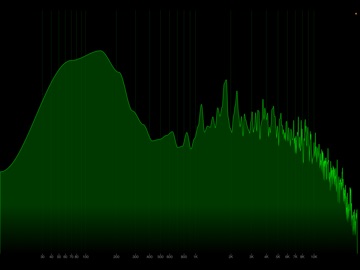





Get audio visuals with your AUv3 host or the standalone app. Scope uses a two-axis graph to give a visual representation of a waveform over time, with the horizontal axis representing time and the vertical axis representing the amplitude.
| Price | $3.99 |
|---|---|
| Author | DiscoDSP LLC |
| Type | Tool |
| Supports | Audio Unit (AU) |
| Rating | total: (21), current: (21) |
| Released | 05/11/2020 |
| Updated | 09/20/2026 |
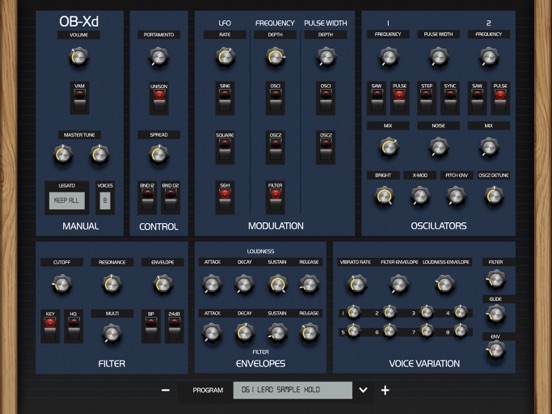
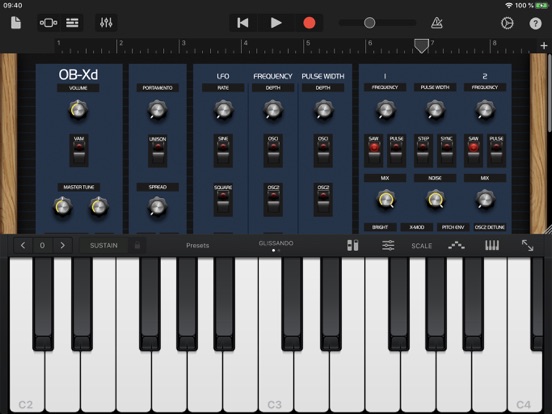
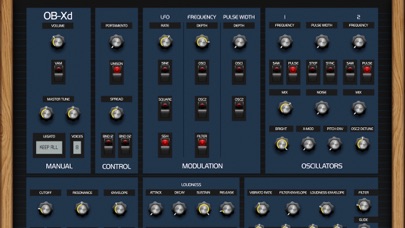
OB-Xd is based on the Oberheim OB-X. It attempts to recreate its sound and behavior, but as the original was very limited in some important ways, a number of things were added or altered to the original design.
| Price | $14.99 |
|---|---|
| Author | DiscoDSP LLC |
| Type | Instrument |
| Instrument type | Synth |
| Instrument sounds | Keyboards |
| Rating | total: (65), current: (65) |
| Released | 05/28/2019 |
| Updated | 09/18/2026 |